How Much Electricity Does AI Really Need?
November 20, 2026 · Rula Halabi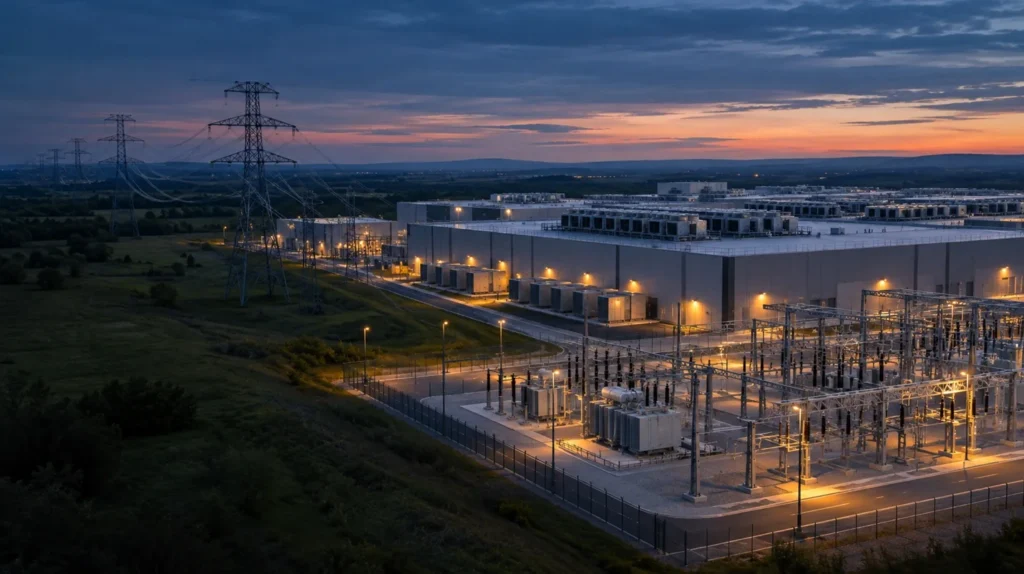
Ask a chatbot to plan a holiday, and an itinerary appears before you’ve finished your coffee. The answer feels like something your phone did. In fact, it came from a data centre where servers ran the calculations, cooling systems carried away the heat, and an electricity grid kept both running.
What happens when millions of people start expecting that same quick answer throughout the day?
The numbers behind the screen
The International Energy Agency estimates that data centres worldwide used about 415 terawatt-hours of electricity in 2024, or roughly 1.5% of global electricity consumption. In its central projection, that figure reaches 945 terawatt-hours by 2030, slightly more than Japan used in an entire year at the time of the report. These figures cover data centres that power a range of digital services. The IEA expects AI to be the biggest driver of the increase. www.iea.org
The number is large, but the location matters just as much. Even in the IEA’s 2030 projection, data centres account for just under 3% of the world’s electricity use. That global share can look modest while putting much more pressure on particular grids. In the United States, for example, nearly half of data centre capacity is concentrated in five regional clusters. www.iea.org
The grid has its own timetable
A chatbot can serve users in Beirut, Tokyo and Toronto. The facility running it still needs electricity in one specific place. If several large data centres cluster in the same area, the local grid has to accommodate that additional demand.
A data centre can become operational in two to three years, according to the IEA. Building out the power system can take longer. The timing matters because a tech company can move quickly to add computing capacity, while new energy infrastructure takes planning, investment and construction. www.iea.org
There’s also room for the forecast to change. More efficient chips and software could reduce the electricity needed for some tasks. Faster adoption could push demand higher. The IEA models different outcomes because both the technology and the ways people use it are still changing. www.iea.org
For most of us, an AI system feels faster when the answer arrives a second sooner. For the places powering those answers, the clock runs in years. Where the next data centres are built, and how quickly their local grids can grow, will help determine where AI can expand next.
https://highlightreview.com/how-much-electricity-does-ai-really-need/