


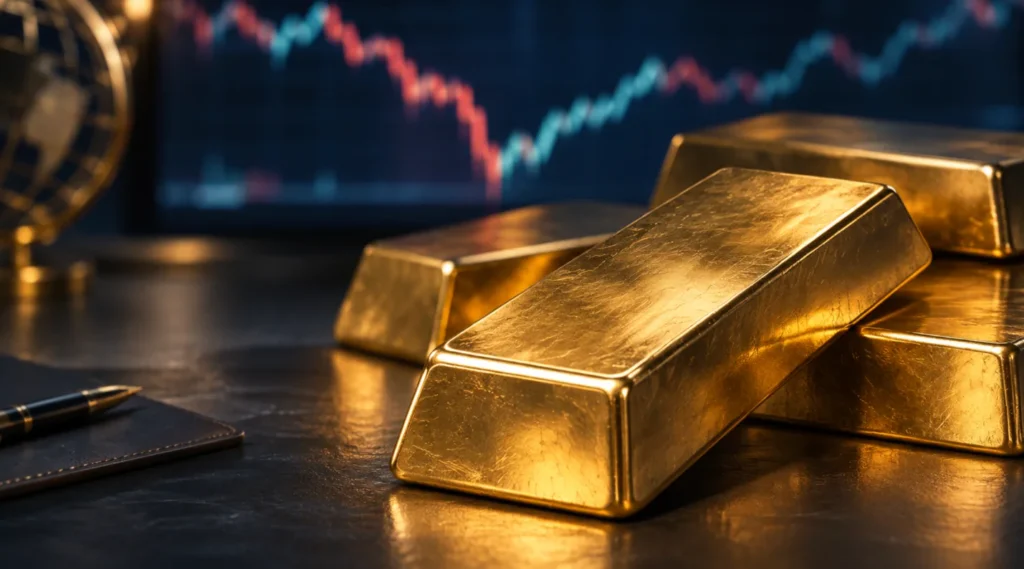
Gold prices rebounded on Monday after falling to a one-year low in the previous trading session, as lower oil prices eased inflation concerns and investors reassessed the outlook for U.S. interest rates.
Spot gold traded at $3,942.57 per troy ounce at 14:11 GMT on November 2, up 1.74 percent, according to Reuters. The quotation reflects that point in trading, rather than a closing price.
The recovery followed a difficult Friday, when gold dropped below $4,000 as a selloff in technology shares spread across financial markets. Reuters reported that spot prices reached their lowest level since October 2025.
Why lower oil prices helped gold
Monday’s recovery highlighted the connection between energy prices, inflation expectations, and monetary policy.
Reuters linked the retreat in oil prices to hopes surrounding diplomatic efforts involving Iran and Qatari mediators. Cheaper oil offered some relief from inflation concerns, potentially reducing pressure for interest rates to remain higher for longer.
That matters because gold pays no interest. When interest-bearing assets offer more attractive returns, holding bullion carries a greater opportunity cost. Expectations for monetary policy can therefore influence demand even when geopolitical uncertainty remains elevated.
The relationship is not automatic. Gold responds to several forces simultaneously, and a change in interest-rate expectations does not determine its next move on its own.
A safe haven can still fall
Friday’s decline also challenged a common assumption: that gold must rise whenever other markets become unsettled.
Analysts cited by Reuters said the technology-stock selloff may have prompted margin calls and forced selling of assets, including gold. In those circumstances, investors seeking cash can sell holdings they would otherwise retain.
A safe-haven reputation describes a potential role during uncertainty. It does not mean an asset is insulated from selling pressure or sudden price swings.
Different buyers face different pressures
The gold market includes central banks, investment funds, individual bullion buyers, and jewelry customers. Their decisions need not move together.
The World Gold Council’s second-quarter 2026 report recorded approximately 289 tonnes of central-bank purchases. During the same quarter, gold-backed exchange-traded funds experienced outflows of roughly 45 tonnes, while jewelry consumption weakened as high prices constrained affordability. These figures describe April–June, rather than current November demand.
The contrast helps explain why a strong source of demand does not prevent a price decline. Buying by one group can coexist with selling or reduced purchases elsewhere.
What comes next?
Interest-rate expectations, the dollar, and developments in Middle East diplomacy remain important factors to watch. The World Gold Council’s July outlook also identified investment flows and central-bank demand as significant influences, while acknowledging sensitivity to yields and monetary policy.
Monday’s rebound recovered part of the recent losses. Whether it becomes a sustained recovery will depend on how those competing pressures develop.
For readers following gold, the distinction is essential: a daily bounce, a longer-term trend, and a forecast are three different things.
 Binance’s $6.3 Billion Hack: What Happened and Where Things StandNovember 5, 2026
 Israeli Strikes Continue in Southern Lebanon as Beirut Pushes for WithdrawalNovember 5, 2026
 The Family Transfers Behind a Much Bigger Economic StoryNovember 5, 2026