


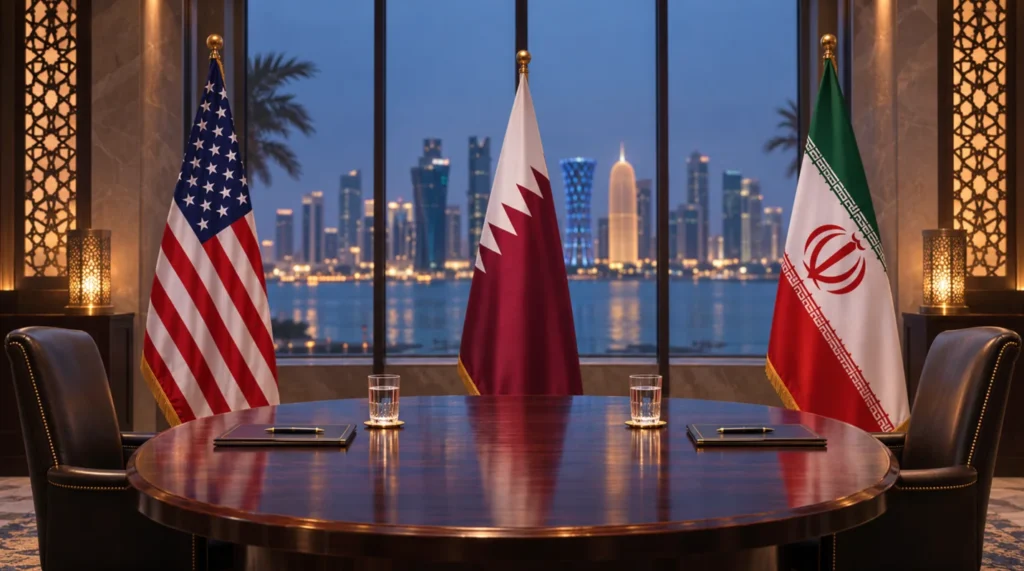
The United States and Iran are continuing to exchange messages through intermediaries after Iranian discussions with Qatari mediators ended without a breakthrough, according to reporting on November 2.
A draft proposal was circulating, and another meeting remained possible, an official briefed on the negotiations told Reuters. Iranian negotiators left Doha on November 1, although the official said their departure did not signal a breakdown in the discussions. No final agreement was announced.
What is being discussed?
Iran says the diplomatic exchanges remain based on a seven-stage proposal it presented in September. Foreign Ministry spokesperson Esmaeil Baghaei said the proposed sequence had been condensed so that its measures could potentially be implemented within two days.
According to Reuters, the plan links an end to the U.S. blockade of Iranian ports with reopening the Strait of Hormuz, easing restrictions on Iranian oil sales, removing new sanctions, and moving toward discussions on other issues. President Donald Trump previously rejected Iran’s September proposal.
The shortened timetable represents Iran’s stated proposal. It does not establish that Washington has accepted the conditions or that implementation has begun.
Baghaei reiterated that Tehran would not agree to reopen or secure the strait unless the blockade ended and Iran’s demands were addressed. Anadolu’s account of his November 2 briefing also reported that messages continued to pass through Qatari intermediaries.
The disagreement over sequencing
One central obstacle is the order in which concessions and negotiations should occur.
Reuters reported on October 28 that Washington wanted Iran’s nuclear program included in negotiations from the outset. Tehran insisted that conditions including an end to the blockade and relief from restrictions on oil exports should be met first. Iran rejects Western concerns that its nuclear program is military in nature.
This makes the sequence itself part of the negotiation. An agreement on which subjects eventually need discussion would still leave the parties needing to decide what happens first, how commitments are verified, and when the next stage begins.
Qatar keeps the diplomatic channel open
Qatar has publicly emphasized that its mediation involves carrying messages and proposals between Washington and Tehran while coordinating with regional and international partners.
In an October 27 briefing, Qatar’s Foreign Ministry described efforts to bridge differences and reach mutually acceptable outcomes. It also stressed regional security and freedom of navigation through the Strait of Hormuz. Those statements describe the mediator’s objectives, rather than confirmation that the parties have reached a settlement.
What would signal real progress?
The next meaningful development would be confirmation from both sides of agreed terms, followed by evidence that the promised steps are being carried out.
A circulating draft, a revised timetable, or continued meetings can indicate that diplomacy remains active. Each falls short of a completed agreement.
For now, the clearest assessment is that the negotiating channel remains open, while substantial differences persist. Claims of a decisive breakthrough should be measured against the positions publicly confirmed by Washington, Tehran, and the mediators.
 Gold Rebounds After Sharp Selloff as Investors Weigh Rates and Middle East DiplomacyNovember 5, 2026
 Israeli Strikes Continue in Southern Lebanon as Beirut Pushes for WithdrawalNovember 5, 2026
 Ukraine and Russia: Local Truce Ends as Peace Talks Remain UncertainNovember 5, 2026